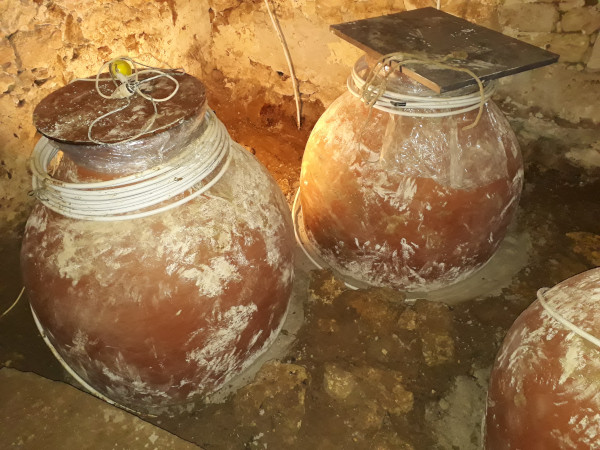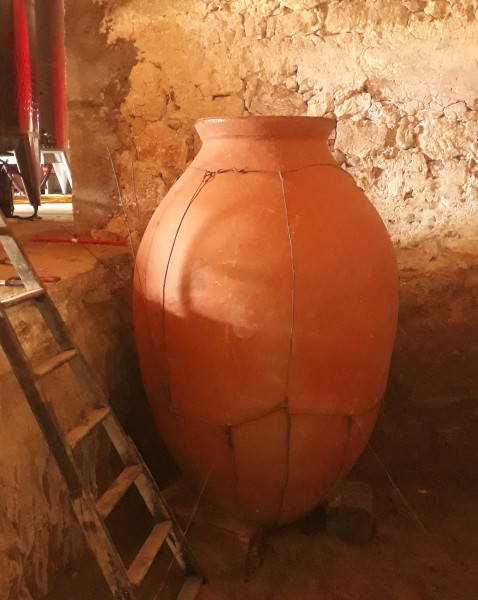
In 2022, we completed the burial of our four kvevris, each of 10 hectolitres, which we had travelled to Georgia to select in person.
A kvevri is a terracotta jar buried in the ground. It is one of the oldest vessels ever used for wine — as well as for oil, grain, and more. In Georgia, the oldest examples are thought to be over 8,000 years old. The Latin-alphabet spelling varies: kwevri, qvevri, qwevri… In Georgian: ქვევრი.
In ancient times, kvevris were often buried directly among the vines. Grapes would be pressed and the must transferred into the jar at the end of the row, barely moments after harvest! Today, any self-respecting Georgian household has at least one in the garage.
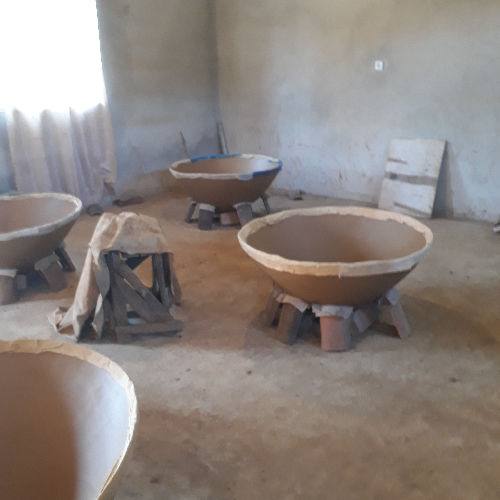
Our kvevris were made by Georgia's finest maker. This craft came close to dying out entirely — at one point, only two makers remained capable of producing quality kvevris. Fortunately, production has grown in recent years, though many years of experience are still required to make a truly good kvevri.
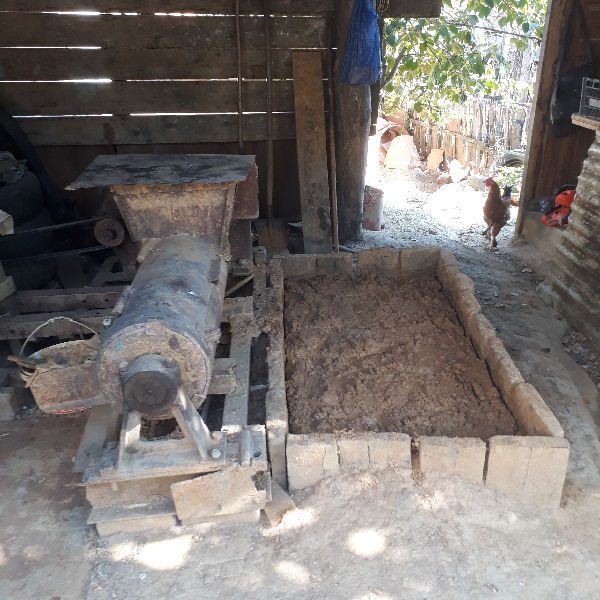
It is a fully handmade artisan product. The selection of different clays is central to the maker's expertise. Our maker draws from several mountain sites to achieve the right composition. The pottery is built by hand using the coil method. Knowing the right pace is essential: the slightly dried clay at the base of the kvevri must be able to bear the weight of the freshly added coils above. Firing takes place in a wooden barn where several kvevris are stacked, surrounded by maize leaves, wood, and other natural fuels. Brick walls are then built around them and the whole is set alight. Once firing is complete, the walls are dismantled to reveal the kvevris.
The final stage is to coat the interior of the kvevri with molten beeswax to make it watertight — without this, water passes straight through.
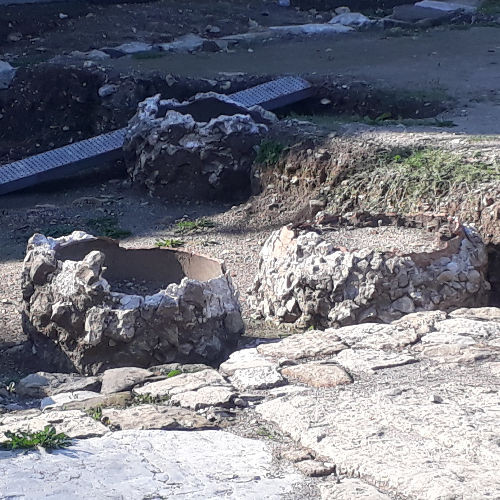
Our kvevris were buried in a casing of lime mortar reinforced with limestone pebbles. This gives rigidity to what is, in truth, a rather fragile vessel, and also sanitises the surrounding environment.
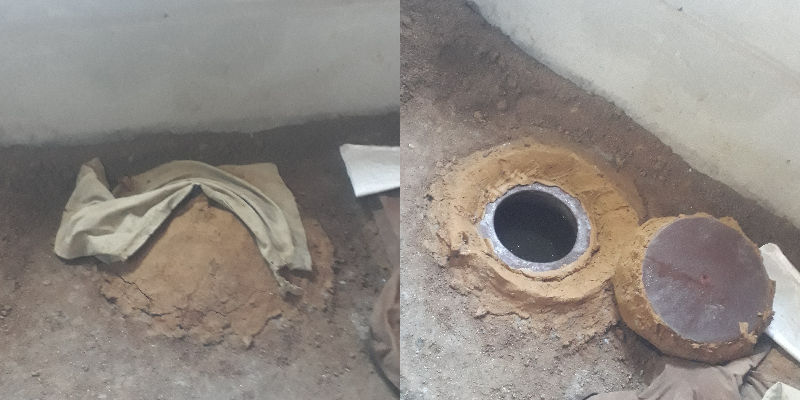
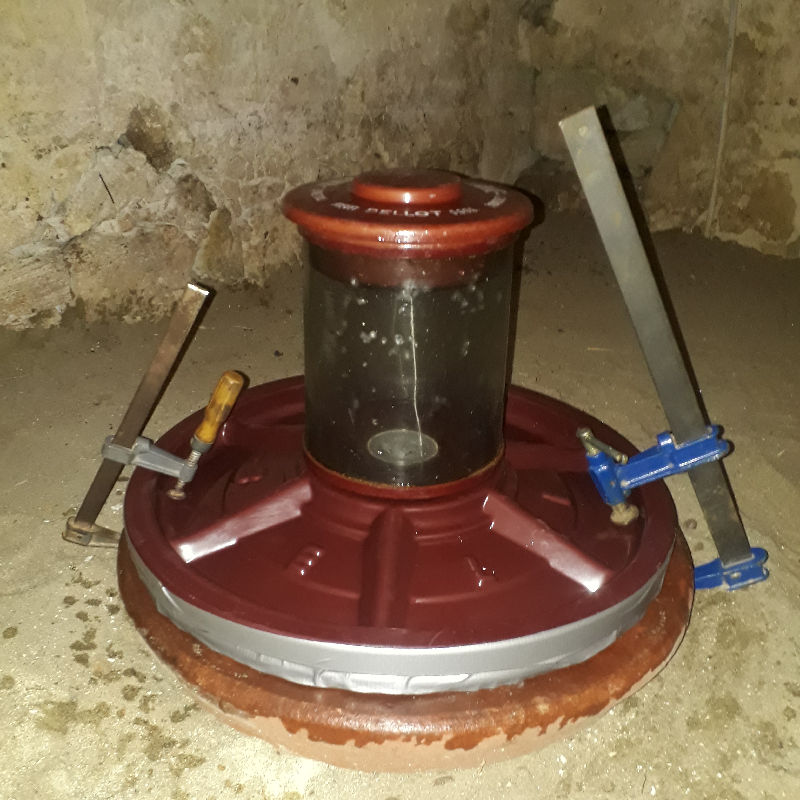
Traditionally, kvevris were sealed with a wooden disc covered by a mound of clay kept moist with a damp cloth laid on top. Opening the kvevri required a spade! More modern techniques are now available, however.
The kvevri imparts no marked flavour to the wine, but is so important to the elegance of our wines. Its behaviour during fermentation is remarkable: fermentations simply never stop!
For us, alongside wood, the kvevri is the most noble of all vessels. It should not be compared to the amphoras currently on the market, which are industrial products. Our kvevris are in themselves true works of art, born of ancestral craft. Each one is different, and each will express something unique.
You will find kvevri-aged wines among several of our cuvées. . Oxymore Orange et Oxymore Red are those which benefit from it most.